 ComingUp

Gallery
About
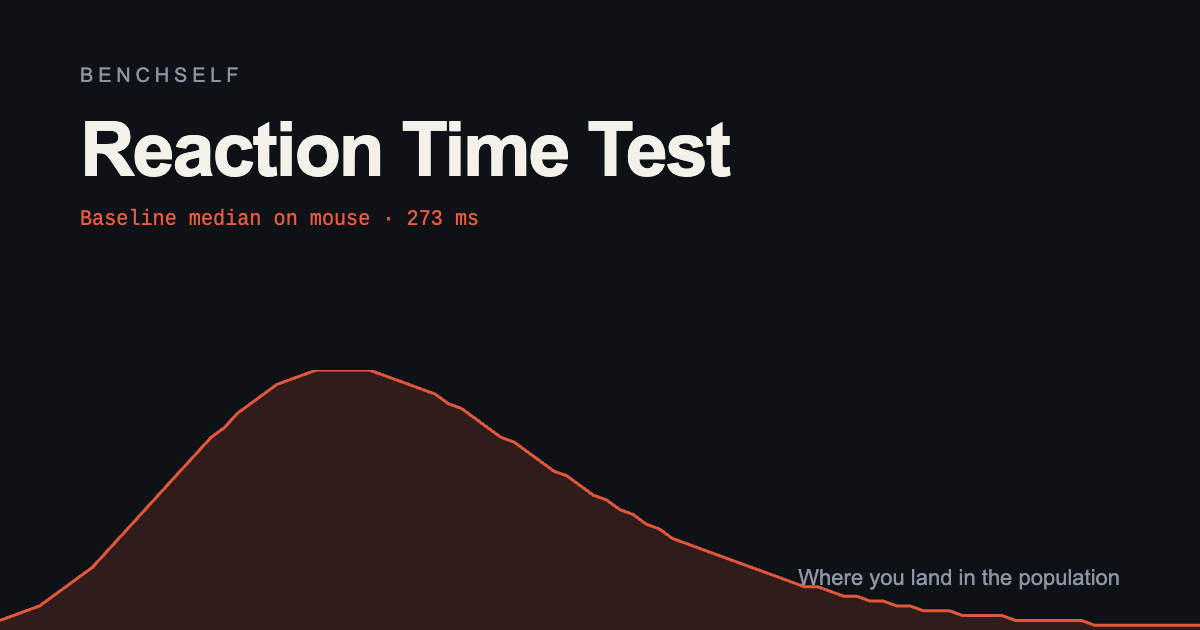
BenchSelf is a set of 18 self-tests that run entirely in the browser. It covers reaction time, reflexes, F1 start lights, click speed over ten seconds, right-click speed, double-click speed, jitter clicking, spacebar tapping, mouse button and polling-rate checks, scrolling, number memory, sequence memory, visual memory, verbal memory, hearing range, colour-blindness screening and peripheral vision.The difference from the usual test page is what happens after the measurement. Most tools hand you a raw number and leave you to guess whether it is good. BenchSelf converts the result into a percentile against a comparison population, and it states which device class that percentile was computed within. A 240 ms reaction time is unremarkable on a mouse and quick on a touchscreen, so the input device is part of the result rather than a footnote underneath it.The methodology page names where each baseline curve came from and marks which numbers are estimates rather than measured distributions, so you can see how much weight a given percentile deserves. Nothing is hidden behind a sign-up: there is no account, no paywall, no ads and nothing to buy. Every test starts on the page you land on, results stay in your browser, and each test page explains what it measures, how many trials it runs and what can distort the reading - display refresh rate, input latency, headphones versus laptop speakers, screen brightness.Typical uses: comparing a new mouse or monitor against your old one, checking whether a keyboard or polling-rate change actually did anything measurable, screening your own hearing range or colour vision out of curiosity, or simply finding out where you sit relative to everyone else who took the same test on the same kind of hardware. The site is free, works on desktop and mobile, and needs nothing installed. Each result page also links to the related tests, so a slow reaction time can be checked against click speed and polling rate before blaming the hardware.
Comments (0)
No comments yet. Be the first to comment!
Related Products
iZoneMedia360 .com – Trusted Hub for Startup & Tech Innovation Trends
An SEO-ready content blog focused on digital media, tech, and business topics wi
Kanso Rental Property Management System
High-end rental property management tool with little competition + large market

Aakhya.AI - Intelligent Cloud Cost Optimization Platform
Intelligent Cloud Cost Optimization Platform
Workalizer
Google Workspace AI-driven insights to improve productivity and performance

e-mail.dev
Turnkey email validator Micro-SaaS on a premium .dev domain.
The Real World of Autism
Globally raising Autism Awareness and Monetizing all parties